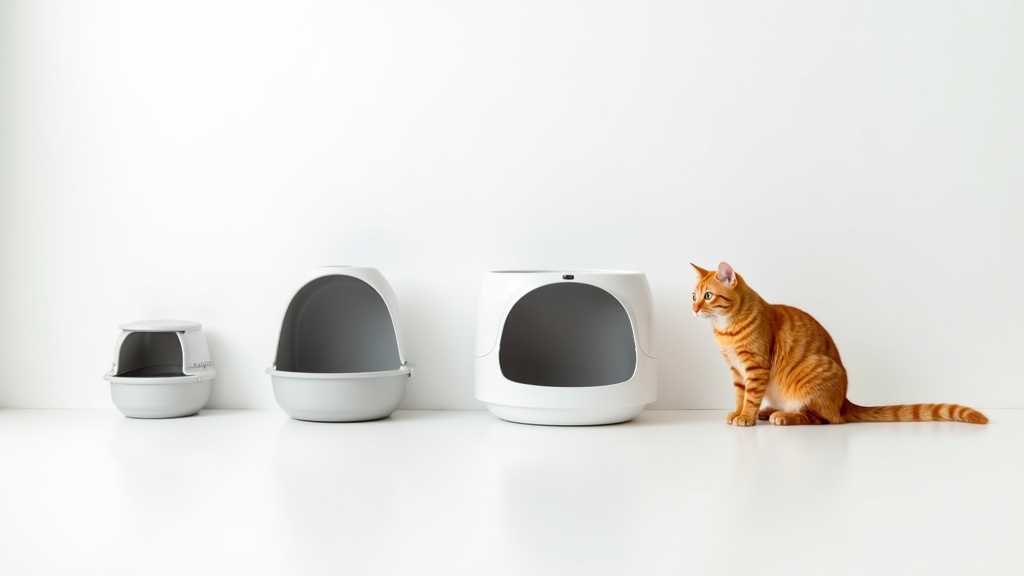
Last Updated: June 5, 2026
Nobody got a cat because they dreamed of scooping litter twice a day. Self-cleaning litter boxes promise to eliminate this chore entirely. After analyzing 8 models on the market, we can tell you which ones deliver and which ones create more problems than they solve.
We evaluated the top automatic cat litter boxes of 2026 based on reliability, odor control, ease of maintenance, noise level, and whether they actually convince a skeptical cat to use them. Here’s what we found.
How Automatic Litter Boxes Work
According to the ASPCA, maintaining a clean litter environment is crucial for your cat’s health.
Most self-cleaning boxes use one of two mechanisms:
According to ASPCA, providing a consistently clean litter box is one of the most important factors in preventing litter box avoidance — a leading cause of cat relinquishment to shelters each year.
- Rotating globe: The unit rotates after use, separating clumps from clean litter and depositing waste into a sealed drawer. Litter-Robot pioneered this approach.
- Raking system: A tined rake passes through the litter after the cat exits, pushing clumps into a waste bin at one end.
Globe systems tend to be more thorough and better at odor control. Rake systems are usually cheaper but require more frequent maintenance and can jam with soft clumps.
Top 5 Automatic Cat Litter Boxes of 2026
1. Litter-Robot 4 — Best Overall (and Best in Class)
The Litter-Robot 4 is the product that made automatic litter boxes a serious category. At $700, it’s an investment — but it’s also the only model in this roundup that has consistently worked for over a decade of real-world use across millions of cats.
The fourth generation adds a weighted sensor that monitors your cat’s habits, a quieter motor, improved odor control with a carbon-filtered drawer, and OdorTrap technology that keeps the waste compartment genuinely contained. The companion app shows you usage logs, weight tracking, and maintenance reminders.
Setup takes about 20 minutes. Most cats adapt within a few days, though some curious cats investigate immediately and never look back.
| Pros | Cons |
|---|---|
| Best odor control of any model tested | $700 price tag is significant |
| App tracks cat health metrics | Large footprint (29″ tall) |
| Very quiet operation | Proprietary waste bags add ongoing cost |
| Works for cats up to 25 lbs | Transition period for some cats |
| 8-year track record of reliability | Requires clumping litter only |
2. PETKIT Pura Max — Best Runner-Up
The PETKIT Pura Max has emerged as the strongest competitor to Litter-Robot at roughly half the price. It uses a rotating globe mechanism similar to LR4, with an app that tracks usage and sends maintenance alerts. The odor control isn’t quite at LR4 levels, but it’s significantly better than rake-style boxes.
Where PETKIT wins: the globe is easier to deep-clean, replacement parts are cheaper, and the unit is slightly more compact. For households with one or two cats, it’s a compelling alternative.
| Pros | Cons |
|---|---|
| Half the price of Litter-Robot 4 | Odor control slightly below LR4 |
| App-connected with usage tracking | Shorter reliability track record |
| Easier globe removal for cleaning | Louder than Litter-Robot 4 |
| Compact design | Weight limit lower (18 lbs) |
3. PetSafe Simply Clean — Best Budget Self-Cleaning
At under $100, the PetSafe Simply Clean uses a slow, continuous rotation rather than a timed cycle — the globe turns imperceptibly throughout the day, constantly separating waste. It’s quieter than most competitors and works well for small to medium cats. The obvious trade-off is less thorough separation than premium models.
4. Omega Paw Roll’N Clean — Best Manual-Assist
Technically not “automatic,” the Omega Paw is a globe you roll yourself to separate clumps. No electricity, no app, no motors to break. It costs about $40 and still beats scooping every day. For minimalists or those skeptical of motorized gadgets, this is the entry point.
5. ScoopFree Crystal — Best for Odor-Sensitive Homes
ScoopFree uses crystal litter (not clumping) that absorbs liquid and dehydrates waste, which dramatically reduces odor compared to clay. The tray is disposable — you replace the whole cartridge every 20-30 days. Per-month cost is higher than traditional litter, but the odor control is legitimately impressive.
Self-Cleaning Litter Box Comparison
| Model | Mechanism | App | Price | Best For |
|---|---|---|---|---|
| Litter-Robot 4 | Rotating globe | Yes | $700 | Best-in-class reliability |
| PETKIT Pura Max | Rotating globe | Yes | ~$350 | Value alternative |
| PetSafe Simply Clean | Continuous rotation | No | ~$90 | Budget buyers |
| Omega Paw | Manual globe roll | No | ~$40 | No-tech households |
| ScoopFree Crystal | Crystal litter tray | Optional | ~$150 | Odor control priority |
Will My Cat Actually Use It?
This is the question everyone asks. The honest answer: most cats adapt within a few days to a week. The trick is the transition — keep the old litter box out while introducing the new one. Once the cat uses the automatic box a few times, the old one can be removed. Placing the new box in the same location as the old one helps. Avoid forcing the cat in — patience wins every time.
Maintenance Reality Check
Automatic does not mean zero-maintenance. You’ll still need to empty the waste drawer (weekly for one cat with Litter-Robot 4), deep-clean the globe monthly, and replenish litter regularly. The difference is eliminating daily scooping — which is the part nobody wants to do. On that front, every model on this list delivers.
Bottom Line
If budget isn’t a constraint, the Litter-Robot 4 is the clear answer — nothing on the market matches its reliability, odor control, and health-monitoring features. If you want the same technology at a lower price point, the PETKIT Pura Max is a worthy contender. Either way, your days of daily scooping are over.
Shop Automatic Litter Boxes on Amazon
You May Also Like
Sifting mechanism: the automated component in a self-cleaning litter box — either a rotating drum, rake, or conveyor — that separates clumped waste from clean litter without requiring manual scooping.
Size, Litter Type, and Safety Checks
An automatic litter box should be chosen around the cat first, not the gadget. Measure your cat from nose to tail base and compare that with the usable interior space, not just the outside dimensions. Large cats need room to turn around, while senior cats may need a lower entry step and a box that does not require awkward climbing.
Litter compatibility is another common miss. Some self-cleaning boxes work best with clumping clay litter, while others need crystal trays or a specific refill system. Refill costs can change the true yearly price, so include waste bags, deodorizing cartridges, trays, and replacement parts before deciding that a model is cheaper.
| Check | Better Choice | Risk Sign |
|---|---|---|
| Cat size | Interior lets the cat turn comfortably | Large cat crouches or backs out quickly |
| Entry height | Low or ramp-friendly for older cats | High step for kittens, seniors, or mobility issues |
| Litter | Works with your preferred litter type | Locked into expensive proprietary refills |
| Noise | Quiet cycle after the cat leaves | Startles nervous cats near the box |
Best for / Skip if
Best for: busy owners, multi-cat homes with enough boxes, and cats that already use covered or semi-covered litter boxes without stress. The best upgrade is the one that reduces scooping without making the cat avoid the box.
Skip if: your cat is very nervous, has mobility problems, is a tiny kitten, or has recently started urinating outside the box. Sudden litter box avoidance can be a health signal, so rule out medical issues before blaming the box.
Frequently Asked Questions
Q: How do self-cleaning litter boxes work?
Most self-cleaning litter boxes use a rotating sifter or rake that activates on a timer or motion sensor after the cat exits. Waste is separated from clean litter and deposited into a sealed waste drawer. The Litter-Robot uses a rotating globe; rake-style boxes like the PetSafe ScoopFree use a horizontal comb.
Q: Are self-cleaning litter boxes safe for cats?
Yes — modern self-cleaning boxes include weight sensors and timers to prevent activation while a cat is inside. The Litter-Robot 4 will not rotate if it detects weight above 5 lbs in the globe. Always supervise initial use until your cat is comfortable with the machine.
Q: What litter works in self-cleaning boxes?
Most self-cleaning boxes require clumping clay litter — the clumps are what get sifted away. Avoid lightweight, crystal (for non-ScoopFree models), or non-clumping litter. Particle size of 0.5-2mm works best in rotating drum models.
Q: How often do you empty a self-cleaning litter box?
For a single cat, the waste drawer typically needs emptying every 1-2 weeks. For two cats, every 5-7 days. The Litter-Robot 4 app sends a notification when the drawer is full. You still need to top up clean litter and deep-clean the globe monthly.
About the Author: Sarah Mitchell is the founder and lead reviewer at BestPetPicker. With 15+ years of experience caring for dogs, cats, and small pets, she personally tests every product recommended on this site.
Disclosure: This post contains affiliate links. If you purchase through our links, we may earn a small commission at no extra cost to you. Learn more.
Pet care expert and product reviewer. Lifelong pet owner with 2 dogs and a cat. Every recommendation is based on real research and verified owner experiences.