Last Updated: September 14, 2026
The Best Cat Carriers for Travel in 2026
A travel cat carrier is a soft- or hard-sided enclosure designed to safely transport your cat by car, plane, or on foot — and choosing the right one can mean the difference between a miserable hissing mess and a calm, purring passenger. We compared seven carriers to help you find the ones that actually earn their price tag.
Comparison Table: Top 7 Travel Cat Carriers of 2026
| Product | Best For | Price Tier |
|---|---|---|
| Sleepypod Air | Airline travel & safety | $$$ |
| Petmate Two Door Top Load | Budget & vet visits | $ |
| Mr. Peanut’s Aspen Series | Road trips | — |
| Diggs Passenger (no longer listed) | Modern design & ventilation | — |
| PetAmi Deluxe Backpack | Hiking & urban walks | $ |
| Gunner G1 Kennel Small | Car safety & large cats | $$$$ |
| Sherpa Original Deluxe | Carry-on & small cats | $ |
Price tiers are based on each maker’s own list price, checked September 14, 2026. $ means under twice the price of the least expensive pick we could confirm in this guide, and each added $ roughly doubles that. A dash means we could not confirm a list price on the maker’s website.
How We Chose These Picks
We compared manufacturer specifications — carrier type, in-cabin dimensions, stated cat weight limits, ventilation, door and loading options, materials, and stated safety ratings — along with price. We did not test these products ourselves. For general cat care guidance, see the ASPCA’s cat care resources.
1. Sleepypod Air — Best Overall Travel Carrier
If you only buy one carrier in your cat’s lifetime, make it this one. Sleepypod says the Air has passed crash tests based on child safety seat standards and fits under the in-cabin seat on most major airlines, though it’s worth confirming your airline’s current dimensions before you fly. The ends compress inward during takeoff and landing, then expand once you’re cruising — genius design.
The plush luxe bedding zips out for washing, and the shoulder strap is padded.
| Pros | Cons |
|---|---|
| Maker-reported child-seat crash tests | Premium price point |
| Maker-reported in-cabin fit on most major airlines | Max 18 lbs (too small for Maine Coons) |
| Converts to a bed at destination | Only one exterior pocket |
2. Petmate Two Door Top Load — Best Budget Pick
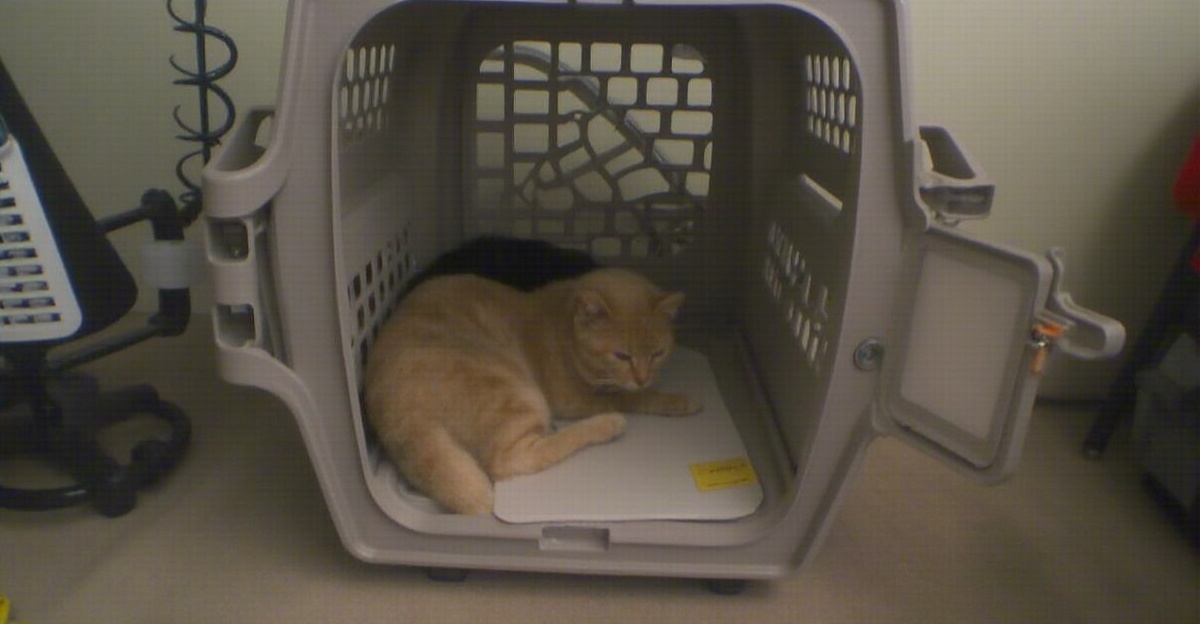
Sometimes you just need a reliable hard carrier for vet trips. The Petmate Two Door is a simple hard-sided carrier. The top-loading door is the unsung hero here — any cat parent who has tried to shove a scared cat through a tiny front door understands immediately.
| Pros | Cons |
|---|---|
| Good fit for vet trips | Not airline approved for in-cabin |
| Easy-open top door (huge for nervous cats) | Basic, utilitarian look |
| Hard plastic shell | No padding or bedding included |
3. Mr. Peanut’s Aspen Series — Best for Road Trips
Mr. Peanut’s describes the Aspen Series as an airline-compliant backpack carrier that can also be used as an in-cabin, under-seat carrier. It has breathable mesh on four sides and padded shoulder straps, and for car trips, Mr. Peanut’s says all of its models include safety features like seatbelt attachments.
The fleece insert is machine-washable.
| Pros | Cons |
|---|---|
| Maker-described airline-compliant backpack | Check under-seat fit with your airline |
| Breathable mesh on four sides | No expansion panel listed by the maker |
| Seatbelt loop included | Heavier than basic soft carriers |
4. Diggs Passenger — Best Modern Design
Availability note (September 2026): Diggs no longer lists the Passenger carrier on its website. Diggs also makes beautifully engineered dog crates, and the Passenger brings that same thoughtfulness to cat carriers. The frame is aluminum instead of flimsy plastic, the mesh panels are reinforced with stitched webbing, and there’s a built-in LED tag holder — small touch, but useful when you’re fumbling in a dim airport.
The Passenger’s main appeal is its balance of structure and softness. Hard carriers can feel confining, while soft ones can collapse when you set them down; the Passenger’s aluminum frame is built to hold its shape.
| Pros | Cons |
|---|---|
| Aluminum frame holds shape | Direct-to-consumer brand (Amazon stock varies) |
| Ventilation on all four sides | Not as compressible as Sleepypod |
| Sleek, modern aesthetic | Limited color options |
5. PetAmi Deluxe Backpack — Best for Hiking & Urban Walks
Not every travel situation involves a car or plane. If you live in a walkable city or hike with your adventure-cat, a backpack carrier changes everything. The PetAmi has a wide base, which matters — narrow-bottomed backpacks can force cats to stand awkwardly.
The two large side entries, three mesh windows, and a safety leash clip make this feel intentionally designed rather than a dog carrier with a cat label slapped on.
| Pros | Cons |
|---|---|
| Hands-free travel for walks and transit | Not ideal for long car trips |
| Wide base | Straps can dig in on longer walks |
| Affordable for a backpack style | Check your airline’s size rules before flying |
6. Gunner G1 Kennel Small — Best for Car Safety & Large Cats
Yes, Gunner makes dog crates. Their small G1 model, however, is a heavy-duty car carrier option for larger cats (think Ragdolls, Maine Coons, or any cat over 15 pounds). Gunner says the G1 holds a 5-star crash test rating from the Center for Pet Safety, and it’s double-walled rotomolded plastic — the kind of build normally reserved for Yeti coolers.
Overkill for most house cats? Absolutely. But if you drive highway speeds with your cat regularly, or live in an area with wildfire evacuation risk, the sturdier build may be worth the cost.
| Pros | Cons |
|---|---|
| Maker-reported 5-star crash test rating | Overkill for most house cats |
| Fits cats up to 25 lbs comfortably | Heavy (Gunner lists 27 lbs for the Small) |
| Waterproof and chew-resistant | Too bulky for air travel |
7. Sherpa Original Deluxe — Best Classic Carry-On
The Sherpa Original is part of the Sherpa Guaranteed On Board program, meaning if your flight is on a participating airline and your Sherpa fits the published dimensions, you get a refund if denied boarding.
The spring-wire frame flexes to fit under tight seats, and it has a faux-lambskin liner. Downside: the mesh is thinner than premium competitors.
| Pros | Cons |
|---|---|
| Guaranteed On Board airline program | Max 16 lbs — smaller cats only |
| Spring-wire frame compresses for tight spaces | Thinner mesh than Sleepypod or Diggs |
| Affordable airline-approved option | Boarding guarantee covers participating airlines only |
How to Choose the Right Cat Carrier
Start with your primary use case. Flying twice a year? Prioritize airline-approved dimensions and in-cabin fit. Mostly vet trips? A hard-sided top-loading carrier will save you grief every single visit. Long road trips or hiking? Consider safety ratings or backpack designs.
Sizing Guidelines
Your cat should be able to stand, turn around, and lie down comfortably. Aim for a carrier roughly 1.5x your cat’s length (nose to base of tail). Undersized carriers cause stress; oversized ones let cats slide around during braking.
Related cat care guide: For a quiet spot to rest at home after a trip or vet visit, see our comfortable cat bed picks.
Carrier Training Before Travel Day
The best carrier is easier to use when the cat has seen it before the trip. Leave the carrier open at home for a few days, add familiar bedding, and reward calm investigation. If the carrier only appears before vet visits, many cats learn to hide as soon as they see it.
For car travel, the carrier should close securely, stay level, and fit safely on the seat or floor area you plan to use. For airline travel, check the airline’s current under-seat dimensions before relying on a product listing. Soft-sided carriers are often easier to fit under seats, but structure still matters so the carrier does not collapse onto the cat.
| Travel Type | Carrier Priority | Check First |
|---|---|---|
| Vet visits | Easy top access and secure door | Can the vet access the cat gently? |
| Car trips | Stable base and strong zippers/latches | Will it slide or tip during braking? |
| Airline travel | Flexible soft side with structure | Current airline under-seat dimensions |
| Nervous cats | Privacy flaps and familiar bedding | Enough ventilation when covered? |
Frequently Asked Questions
Are soft-sided or hard-sided carriers better for cats?
Both have their place. Soft-sided carriers work best for air travel and short trips because they compress to fit under seats and feel more den-like. Hard-sided carriers shine for vet visits, longer drives, and situations where you need a carrier that won’t collapse when your cat presses against the walls.
What size cat carrier do I need for airline travel?
Most US airlines require in-cabin pet carriers to fit under the seat, typically around 18″ L x 11″ W x 11″ H, though this varies. Check your specific airline’s published dimensions before buying. Sleepypod Air and Sherpa Original Deluxe are engineered to meet these standards.
How do I get my cat used to a carrier?
Leave the carrier out permanently, not just before trips. Place a worn T-shirt, favorite toy, and occasional treats inside. Feed meals near or in the carrier. Cats tend to acclimate more readily when you make the carrier feel like part of the furniture rather than a predictor of vet visits.
Can two cats share one carrier?
Generally, no. Even bonded cats can become stressed and redirect aggression during travel. Each cat should have their own carrier sized appropriately for them.
Should I feed my cat before a long car trip?
Ask your veterinarian how to time your cat’s meals before a long car trip, especially if your cat is prone to motion sickness. Always bring fresh water and offer it during longer stops.
The Bottom Line
The Sleepypod Air remains our top overall pick for its manufacturer-reported crash tests, airline-friendly design, and plush, washable bedding. If you’re shopping on a budget, grab the Petmate Two Door Top Load — a simple hard-sided carrier with a handy top-loading door. For adventure cats and urban walkers, the PetAmi backpack opens up a whole new way to spend time together. Whichever carrier you choose, introduce it slowly and make it a positive space. Your cat will thank you on the next vet visit.
Disclosure: This post contains affiliate links. If you purchase through our links, we may earn a small commission at no extra cost to you. Learn more.